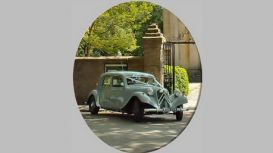
Introduced in 1934, the Traction Avant was recognised as being one of the most revolutionary cars available. Along with front wheel drive it incorporated unitary construction, torsion bar suspension and hydraulic brakes, all on a mass produced family car. It had a three-speed gearbox mounted ahead of the engine in the nose of the car, and the drive went through CV-jointed drive shafts to torsion-bar-suspended front wheels; this was cutting-edge technology in those days. By the standard of 1934, its road-holding was almost unbelievably good, albeit at the expense of heavy steering. Sadly, the high development costs sent a penniless Andre Citroën to an early grave and his company into the arms of Michelin, but the Legère and its many derivatives went on to success, selling strongly for 23 years. Front-wheel drive wasn't the whole story. Unitary construction was still a rarity in 1934 and the car was both roomy and comfortable to ride in, with torsion-bar independent suspension at the rear too. Top speed with the 45bhp 1911cc four cylinder engine was 70mph (112 kph).
The bodywork of the elegant Citroën Traction Avant was the brainchild of FLAMINIO BERTONI (1903-1964) one of the 20th century's most gifted automotive designers. This was the car of choice of the French Resistance, some criminals - for example the infamous Traction Gang led by Rene Girier (known as Rene the Cane), Charles de Gaulle, the Surete, French taxi drivers and Simenon's fictional French detective Maigret.
The bodywork of the elegant Citroën Traction Avant was the brainchild of FLAMINIO BERTONI (1903-1964) one of the 20th century's most gifted automotive designers. This was the car of choice of the French Resistance, some criminals - for example the infamous Traction Gang led by Rene Girier (known as Rene the Cane), Charles de Gaulle, the Surete, French taxi drivers and Simenon's fictional French detective Maigret.